

Incidents of domestic violence are likely to remain constant in Wollongong despite fears they would rise as a result of COVID-19.
NSW Bureau of Crime Statistics and Research (BOCSAR) data for March 2020 showed no evidence of an increase in domestic violence in NSW since social distancing was implemented in response to the COVID-19 pandemic. The police recorded crime data showed incidents of domestic violence-related assault in March 2020 are equivalent to those for March 2019.
Data supplied by: NSW Bureau of Crime Statistics and Research
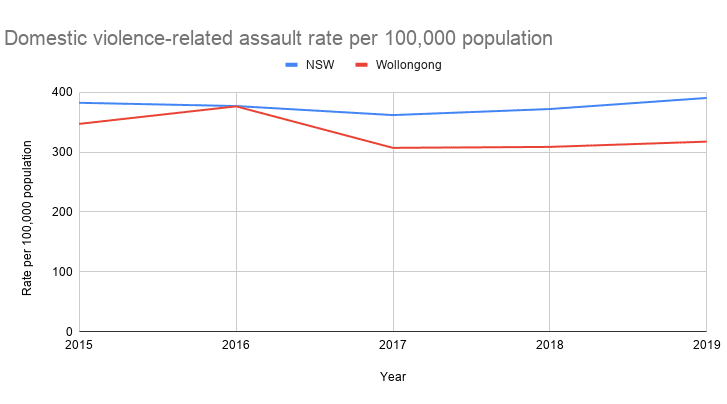
Domestic violence rates per 100,000 population have historically remained lower in Wollongong than the rate for NSW. In other words, incidents of domestic violence in relation to the population have been lower in Wollongong than in NSW since 2015.
BOSCAR data also revealed each rate has been on a slight upward trend since 2019 while remaining relatively stable.
If incidents of domestic violence-related assault in March 2020 are equivalent to those for March 2019 in NSW, it is likely they will remain unchanged in Wollongong also.
However, support organisations warn domestic violence data might not be accurate because victims are scared to report. Housing Plus Head of Community Services Penny Dordoy told the ABC victims trapped with their abusers in isolation might not feel safe reporting incidents of domestic violence to the police.
“People feel like they don’t have the time or any safe time to report, [they’re] trapped in the home and feel a bit more helpless,” Ms Dordoy said.
“Trying to leave domestic violence is a dangerous time anyway and so with this heightened feeling of fear that people have, they just don’t feel like this is a risk they want to take for them and their children.”
If you or someone you know is experiencing violence and need help or support, please contact one of the support hotline numbers below, or find support services near you.
1800RESPECT
1800 737 732
Lifeline
13 11 14
Rates of domestic violence are likely to stay the same in Wollongong despite fears they would rise as a result of COVID-19. Support organisations say victims are scared to report as they feel trapped with their abusers in isolation. #UOWTV #uowcreative
— Mia Hull (@mia_hull_mp3) May 20, 2020